Bunk Bed vs. Two Twin Beds: Which Is Right for Your Kids’ Room?

Two beds may fit in a shared bedroom, but will there still be room to open drawers, put away toys, and get ready in the morning?
The bunk bed vs two twin beds decision is about how your family will use the room every day. A bunk can leave more floor space available. Separate twins can make bedtime easier and give you more freedom to rearrange.
If you’re weighing a bunk bed vs two separate beds, here’s how to decide which setup fits your family’s daily routine.
Quick Answer
Choose a bunk bed if separate beds would crowd out needed play, study, or storage space—and the children and room are suited to upper-bunk use. Choose two twin beds if both fit comfortably and you value easy access and flexible placement. A convertible bunk is worth considering if you need space now but may want separate beds later.
Bunk Bed vs. Two Twin Beds: A Simple Comparison
| Your Priority | Bunk Bed | Two Twin Beds |
|---|---|---|
| More open floor space | Usually the better fit | Uses more floor space |
| Easy access to both children | Upper bed requires climbing | Both beds are within easy reach |
| Rearranging the room | Fewer layout options | More placement options |
| Separate bedrooms later | Must be designed to separate | Ready to move individually |
| Age and ceiling height | Can rule this option out | No upper-bunk requirement |
| Lower total cost | Depends on the model | Depends on both frames |
Start With What the Room Needs to Do
Before looking at styles, decide what must fit alongside the beds: a dresser, a desk, toy storage, or an open area for play.
Then picture the room with two separate twins. Can the door open fully? Can the children reach their storage? Is there a clear path around the furniture?
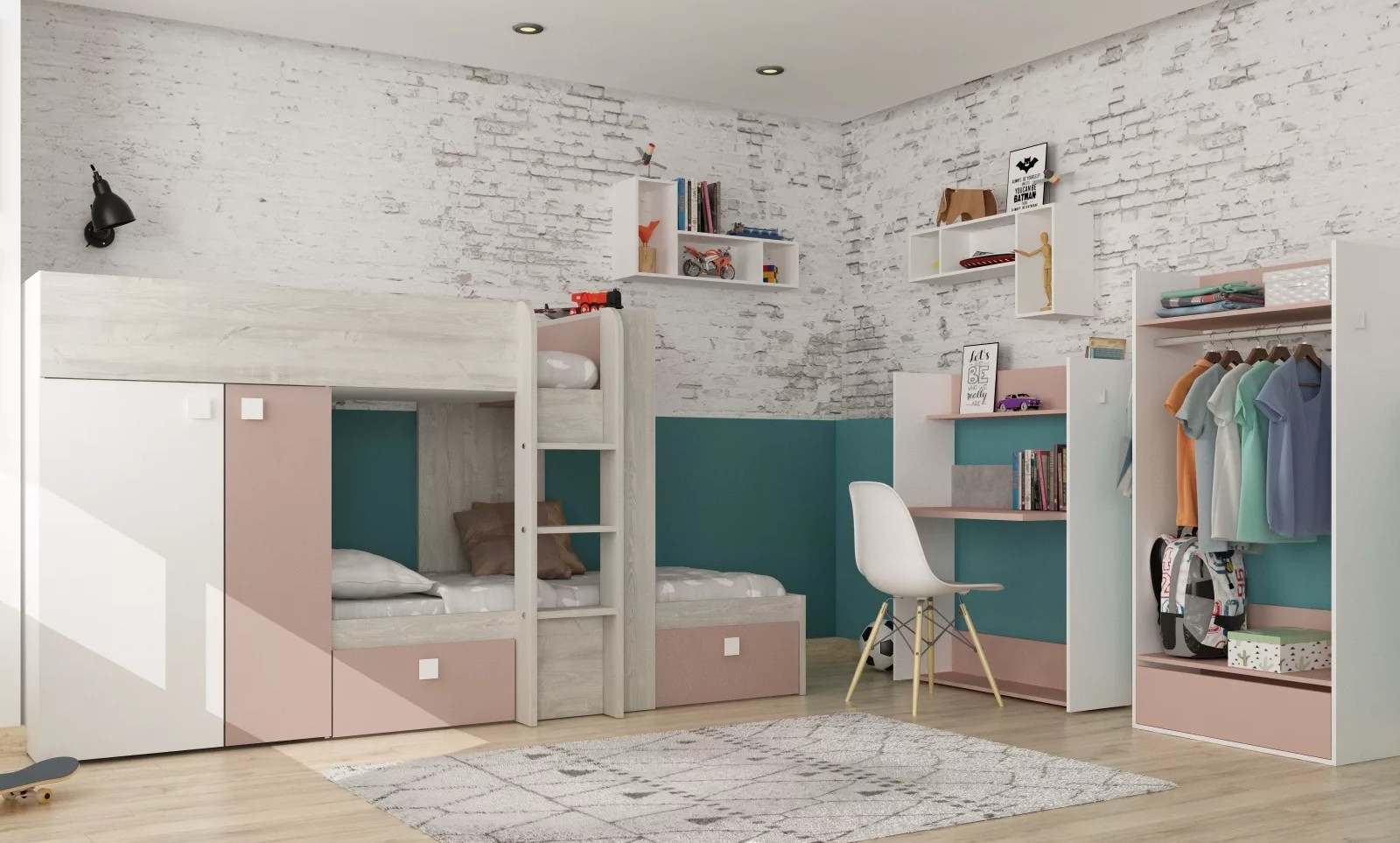
If the answer is no, a bunk bed may solve a real space problem. Bunk beds for shared bedrooms can leave room for furniture or activities that would otherwise be squeezed out.
When comparing bunk beds for small rooms, check the complete design. Wide stairs, an angled ladder, or pull-out storage can use some of the space you hoped to save.
A practical way to compare is to mark the actual bed dimensions on the floor with painter’s tape. Include ladder access and room to open drawers. This makes the choice easier to picture before ordering.
 Think About Bedtime, Not Just the Layout
 Think About Bedtime, Not Just the Layout
If both arrangements fit, consider how you use the beds.
Do you sit beside a child to read? Does either child regularly need help at night? Would changing sheets on an upper bunk be difficult for you?
Choosing two twin beds for kids can make these routines easier. Both are accessible without climbing, and each child can have a distinct corner of the room.
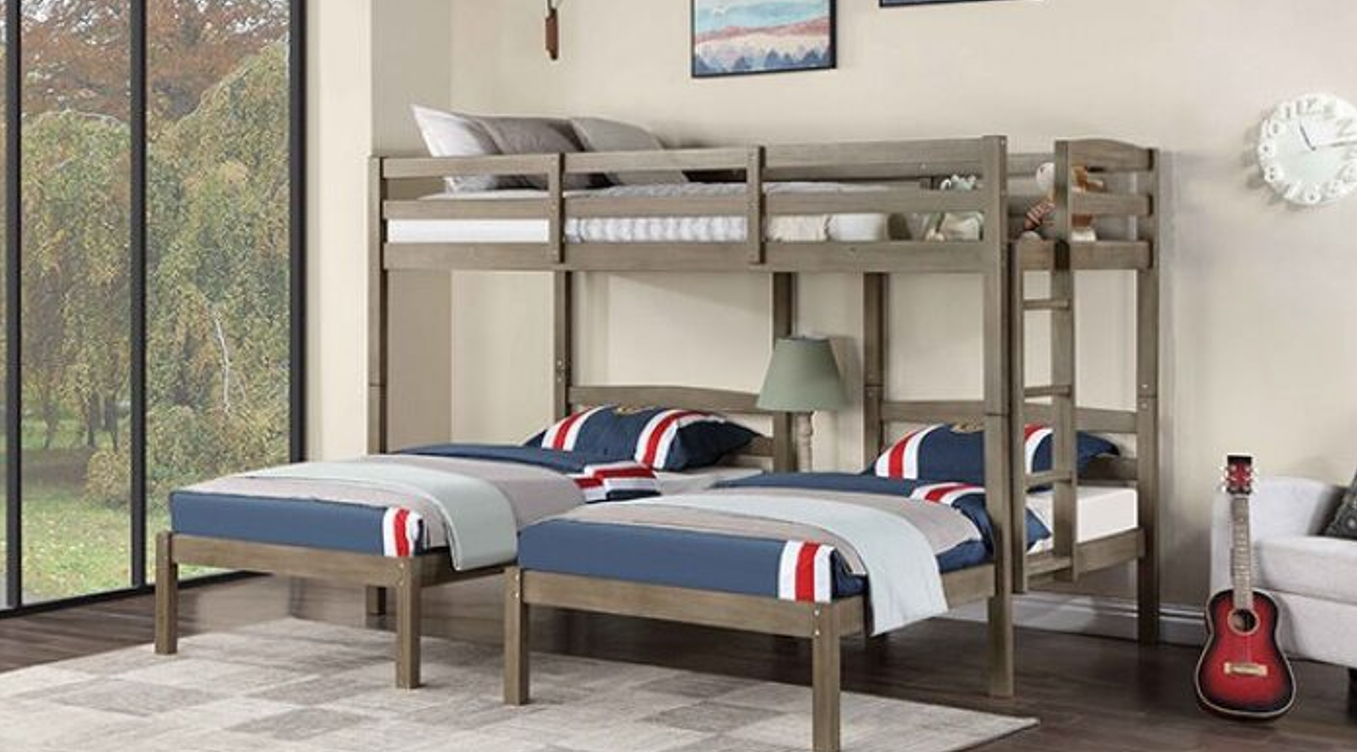
They also give you more placement options. You might arrange them side by side, along opposite walls, or in an L-shaped layout.
You do not need a ready-made two-bed set. Two individual twin beds—matching or in coordinating styles—can create the arrangement.
If separate beds leave enough room for everything your children need, there may be little reason to choose a bunk purely to save space.
Check Whether a Bunk Is Suitable Before Going Further
 Check Whether a Bunk Is Suitable Before Going Further
Children under 6 should not use the upper bunk, according to the U.S. Consumer Product Safety Commission. Older children must still be able to follow the safety instructions and use the climbing access appropriately.
Follow the manufacturer’s requirements for assembly, guardrails, mattress size and thickness, and weight limits.
Check the ceiling height, headroom above the intended mattress, and access to the ladder or stairs. Keep the bunk away from ceiling fans and follow the manufacturer’s placement and clearance guidance.
If neither child can use the upper bunk appropriately, or the room cannot provide suitable clearance, separate age-appropriate beds are the practical choice for now.
Compare the Full Setup Before Deciding on Price
The useful comparison is one bunk frame versus two individual twin frames with similar materials and features.
Then add anything else each arrangement requires:
- Two suitable mattresses, unless you already have compatible ones.
- Foundations or other mattress supports required by the frames.
- Storage or trundle options you actually want.
- Delivery and assembly services you plan to use.
A bunk’s mattress-thickness limit may mean replacing a mattress you already own. On the other hand, built-in drawers might replace a storage piece you were planning to buy.
Neither arrangement is always cheaper. Compare what you would actually order, rather than the lowest starting price on each page.
Consider Whether the Beds Will Need to Separate Later
If your children may move into separate bedrooms, two individual twins offer a straightforward path: each bed moves with its sleeper.
A convertible bunk bed can offer another option when floor space is tight today. Some U-Trade models are designed to become two separate twin beds later.
Check that the exact model supports this conversion and review the instructions before buying. Not every bunk separates.
This is especially useful when sharing a room is temporary. You can plan for the current room without overlooking what the family may need next.
Choose Extra Features Only When They Help
A twin-over-twin bunk bed is usually more compact. A twin-over-full bunk bed offers a wider lower sleeping surface but generally takes up more room.
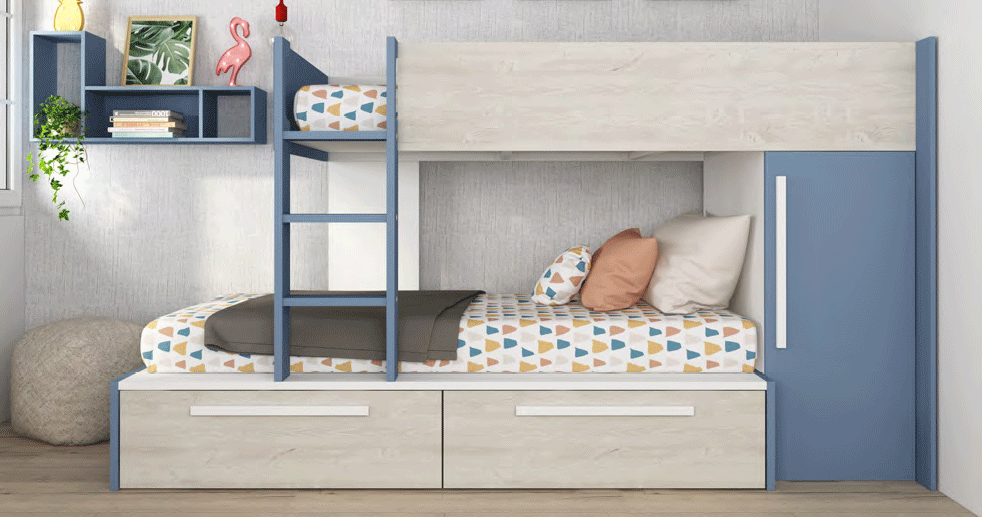
A bunk bed with trundle can provide an extra sleeping place, while drawers can help with everyday storage. Make sure there is room to use either feature when fully extended.
For three children, options also include three stacked beds or a configuration with two upper beds and one lower bed. These need their own layout, ceiling-clearance, and age checks.
Choose Your Next Step at U-Trade
By now, the decision should come down to your main priority:
- You need room for a desk, storage, or play: Browse Bunk & Loft Beds, focusing on bunk configurations with two sleeping spaces.
- You want easy access and flexible placement: Explore individual twin beds in Youth Beds and choose two for the room.
- You need space now and separate beds later: Review the Micah twin-over-twin bunk, whose listing describes conversion into two twin beds.
Before ordering, confirm the selected configuration, included components, dimensions, and current availability. If a specification is unclear, contact U-Trade with the model name and your room measurements.
Frequently Asked Questions
Can I use the twin mattresses we already have?
Only if they meet the selected bed’s requirements. For bunks, check the specified length, width, and maximum thickness—not just the “twin” label.
Are two twin beds better for older children?
They may suit children who want more distinct sleeping areas or expect to move into separate rooms. Check that the mattress size still suits each child.
Does a bunk with stairs save as much space as one with a ladder?
Not necessarily. Stairs can increase the overall footprint. Compare the complete dimensions and access space of the specific models.
Can U-Trade bunk beds become two separate beds?
Some can. The Micah and Lovia twin-over-twin listings describe this feature. Confirm it for the exact model before ordering.
What if both arrangements work equally well?
Let daily use decide. Choose separate twins for easier access and rearranging, or a suitable bunk if you have a clear use for the extra floor space.
Visit U-Trade Furniture: 9950 Foothill Blvd, Suite N, Rancho Cucamonga, CA 91730
Call Us: +1 (909) 931-0599